
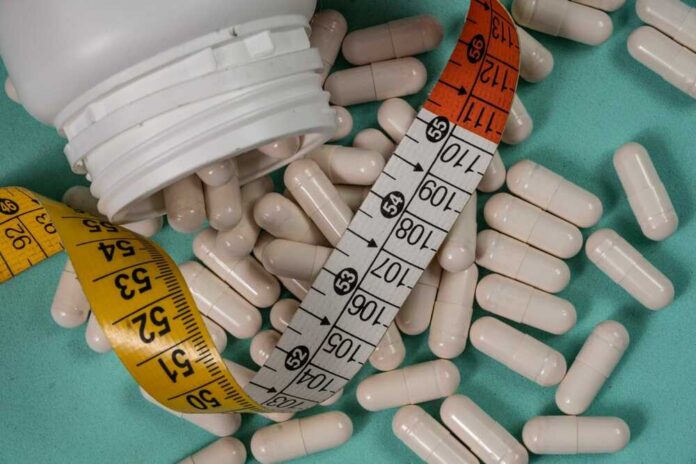
Eli Lilly’s new obesity pill threatens to disrupt the weight loss industry, challenging major competitors with a needle-free solution.
Story Highlights
- Eli Lilly’s pill helps maintain weight loss after patients switch from injections.
- The pill, named orforglipron, seeks FDA approval for obesity treatment.
- Trial data suggests effective transition from weekly injections to a daily pill.
- Potential market competition with Novo Nordisk’s oral obesity treatment.
Eli Lilly’s Pill Emerges as a Weight Loss Game Changer
Eli Lilly announced that its obesity pill, orforglipron, demonstrated significant efficacy in maintaining weight loss after patients transitioned from injections. This development could shift the paradigm in obesity treatment by offering a convenient, needle-free alternative.
The pill targets GLP-1, a hormone that regulates hunger and blood sugar, and has shown promise in late-stage trials involving over 300 patients. Those who switched from Novo Nordisk’s Wegovy regained only a fraction of the weight they had lost.
The FDA has fast-tracked the review of orforglipron, potentially accelerating its market entry. This move indicates the agency’s recognition of the pill’s potential impact on obesity management.
With its ease of use and lack of dietary restrictions, Eli Lilly’s pill stands out from existing treatments like Rybelsus and oral Wegovy, which require specific dietary considerations.
Analysts predict that this innovation could capture a significant share of the global weight loss drug market, estimated to reach $95 billion by 2030.
Eli Lilly says obesity pill helps maintain weight loss after patients switch from Wegovy, Zepbound https://t.co/4aUnOYO7W0
— CNBC (@CNBC) December 18, 2025
Market Implications and Competitive Edge
The introduction of Eli Lilly’s pill could intensify competition in the lucrative GLP-1 market. While Novo Nordisk is poised to launch its own oral obesity treatment, Eli Lilly’s needle-free option might appeal to patients seeking a simpler, more consistent solution.
The trial results suggest that orforglipron not only helps maintain weight loss but also offers a new revenue stream for Eli Lilly, potentially capturing a large share of the daily oral segment, according to Goldman Sachs.
Safety and tolerability are crucial for any new medication, and Eli Lilly’s pill has shown a favorable profile. Most side effects were mild-to-moderate gastrointestinal issues, with a small percentage of patients discontinuing due to adverse effects.
No liver safety concerns were noted, further reinforcing the pill’s viability as a long-term treatment option. The full trial results are expected to be published and discussed at an upcoming medical conference, paving the way for Eli Lilly to solidify its position in the obesity treatment landscape.
Future Prospects and Challenges
While the results are promising, Eli Lilly faces challenges as it seeks to enter a market dominated by established players. The company must navigate regulatory hurdles and patient preferences to gain traction.
However, with a potentially faster FDA review and strong trial outcomes, orforglipron could become a frontrunner in weight loss solutions. Its unique formulation, which allows for easier absorption without dietary restrictions, might give it an edge over competitors.
As Eli Lilly prepares for the commercial launch of its obesity pill, the healthcare industry watches closely. The impact of this innovation could extend beyond weight loss, influencing how pharmaceutical companies approach chronic disease management.
By offering a practical, effective option, Eli Lilly not only addresses a significant health challenge but also aligns with consumer demands for more accessible treatments.