
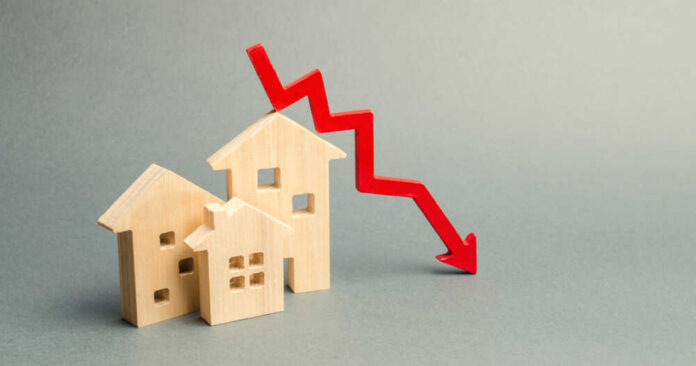
Despite mortgage rates falling to their lowest levels since 2022, existing home sales plummeted 8.4% in January 2026, exposing a troubling new phase in America’s housing crisis that should alarm every hardworking family trying to achieve the American Dream.
Story Snapshot
- National Association of Realtors reports 8.4% drop in existing-home sales from December 2025, marking a deepening crisis despite improved mortgage rates
- Housing inventory remains 17.2% below pre-pandemic norms, while homes now take 66 days to sell, the longest timeframe in seven years
- Buyers face monthly payments averaging $2,580 at 6.14% mortgage rates, maintaining an affordability crisis for middle-class families
- Regional disparities hit hardest in metros like Oakland and Minneapolis, with pending sales declining over 21% in some areas
Sales Collapse Despite Lower Rates Signals Market Dysfunction
The National Association of Realtors confirmed existing-home sales dropped 8.4% in January 2026 compared to December 2025, with declines registered across all U.S. regions.
This represents a disturbing trend occurring as mortgage rates fall to 6.11%, the lowest since 2022, according to Freddie Mac data.
The disconnect between improved borrowing costs and collapsing sales activity reveals systemic dysfunction in the housing market that previous rate-driven analyses failed to capture.
Zillow’s preliminary nowcast showed 219,644 homes sold, down 4% year-over-year and 26.4% month-over-month, while Redfin reported pending sales fell 5.1% year-over-year for the four weeks ending February 8.
Existing-home sales decreased by 8.4% in January. Month-over-month and year-over-year sales fell in all regions. https://t.co/Yy8erbMK24
— National Association of REALTORS® (@nardotrealtor) February 12, 2026
Inventory Constraints Persist Despite 27 Months of Growth
Active housing inventory stands at 1.11 million homes, up 10% year-over-year but still 17.2% below 2017-2019 pre-pandemic norms according to Realtor.com data released February 5.
This represents a troubling reversal after 27 consecutive months of inventory growth through 2025, with new listings down 1.8% year over year, marking the first decline since 2023.
Danielle Hale, Chief Economist at Realtor.com, acknowledged “recovery has lost steam” while supply remains inadequate. The median list price holds steady at $399,900, though it is down 1.6% per square foot year over year.
This artificial scarcity stems partly from the “lock-in effect” created when the Federal Reserve’s reckless rate hikes trapped homeowners with sub-4% mortgages, discouraging them from selling.
Affordability Crisis Continues Crushing Middle-Class Dreams
Monthly housing payments average $2,580 at the current 6.11% mortgage rate, down just 3.8% year over year but still crushingly high for working families.
Homes now take an average of 66 days to sell, the longest selling period in seven years, indicating severe buyer hesitation despite marginally improved conditions.
The percentage of homes with price cuts fell to 14.3% from 15.6% year over year, suggesting sellers maintain unrealistic pricing expectations while buyers face economic uncertainty amid lingering inflation and job market concerns.
Regional disparities intensified, with West and South metros experiencing the tightest inventory conditions. Oakland saw pending sales crater by 21.6%, while markets like San Jose showed isolated strength, with new listings up 24.3%, revealing a fractured national market where local conditions vary widely.
Realtors report a ‘new housing crisis’ as January home sales tank more than 8%
— Conservative (@Conservative1AZ) February 12, 2026
Biden-Era Policies Created Foundation for Current Collapse
The current crisis traces directly to the Biden administration’s fiscal mismanagement, which fueled runaway inflation and forced the Federal Reserve to implement aggressive rate increases starting in 2022.
Those hikes pushed mortgage rates from sub-3% levels to over 7%, destroying housing affordability and creating the lock-in effect that artificially constrains supply today.
J.P. Morgan now projects flat 0% home price growth with only gradual sales recovery through 2026, a stagnant outcome that punishes savers and homeowners while benefiting institutional investors.
The divergence between new-home sales rising year over year in January and existing-home sales collapsing by 8.4% reveals how builders adapted while ordinary homeowners remain trapped.
Real estate brokerages face plummeting commissions, affecting small business owners nationwide who depend on transaction volume for their livelihoods.
Sources:
Zillow predicts new 2026 change in US housing market real estate – TheStreet
Inventory Gains Slow Down in January – Realtor.com Monthly Housing Report
Redfin Reports Pending Home Sales Decline in All But 5 Major U.S. Metros – Morningstar
Existing Home Sales – National Association of Realtors
US Housing Market Outlook – J.P. Morgan
New Home Sales Rise Year-Over-Year as Prices Stabilize – Eye on Housing