
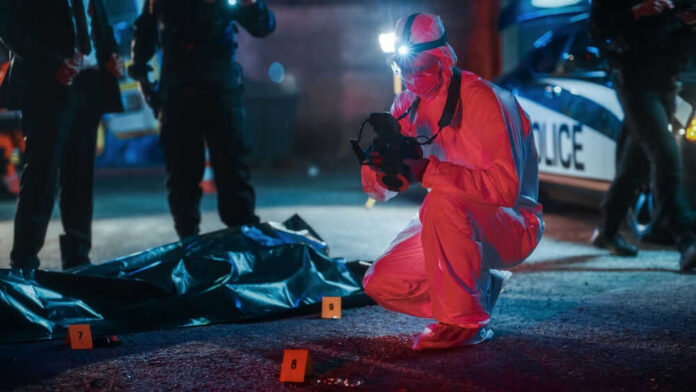
A bloody Chicago weekend left at least 19 people shot and 6 dead, yet the same politicians still pretend their soft-on-crime experiment is “working.”
Story Snapshot
- Police and local media say at least 19 people were shot in Chicago over the weekend, with the death toll rising to 6 as updates came in.
- Earlier counts showed 4 killed, then rose as victims died and new cases were added, exposing how “live updates” can hide the true scale of violence.[1]
- Recent Chicago weekends have seen similar or worse carnage, with past reports of 18 shot and 6 killed, and even holiday weekends with dozens wounded.[1][5]
- Despite a national drop in homicides, Chicago’s ongoing gun crime shows the deep cost of years of weak prosecutors, failed city leadership, and broken families.[3][5][8]
Chicago Weekend Shootings Show Deadly Cost of Failed Urban Policies
Chicago police and local outlets reported that at least 19 people were shot in separate incidents across the city over a single weekend, with 6 of those victims dying from their wounds as the final counts came in.
Earlier in the weekend, a live update from local television reported 19 shot but only 4 killed, based on police numbers through late Sunday night.[1] Later updates added more deaths, showing how quickly the toll can grow as victims succumb.
Reporters noted that police track these weekend numbers from Friday evening through late Sunday, a time window that has become a grim ritual for Chicago residents.[1]
The same live blog that showed 19 shot and 4 killed also pointed out that the previous weekend saw 18 people shot and 6 fatally, reflecting a pattern rather than a one-time spike.[1] For people living in the hardest-hit neighborhoods, these rolling tallies are not just statistics but the weekly backdrop of life.
Why The Death Count Keeps Changing — And Why It Matters
The fight over whether this weekend ended with 4 dead or 6 dead is more than a math issue; it shows how crime reporting often lags behind reality.
Early numbers come from police logs and hospital reports in “real time,” which means people listed as wounded on Sunday night may die on Monday and quietly shift into the homicide column. Media sites post “live updates,” but headlines and social media shares can freeze the lower number in people’s minds.[1]
Chicago crime coverage has shown this pattern many times, with initial “at least X shot, Y killed” stories later updated as more details emerge.[1] This “count drift” lets some leaders shrug off criticism by pointing to early, smaller figures while critics cite later, higher totals.
For families on the ground, the debate feels cold. What they see is that another child, father, or grandmother did not make it home, no matter which version of the headline was trending that day.
A City Used to Violence While Leaders Lecture the Rest of America
Chicago has become a symbol of constant gun violence, with local data showing hundreds of people killed by guns in the last year alone.[3] Public radio and local investigations have described a pace of shootings so steady that, for a long stretch, someone was shot nearly every other hour in the city.[6]
Even as national homicide numbers have started to ease from pandemic highs, Chicago and a few other big cities still carry a heavy share of the body count.[5][8]
Past years show how bad these weekends can get. One Fourth of July stretch saw 17 people killed and about 70 others wounded in Chicago.[3] Other holiday weekends have recorded more than 90 people shot, with at least 17 killed, turning what should be family time into emergency-room triage.[2]
While national media often focuses on single high-profile shootings elsewhere, Chicago families endure a rolling mass casualty event almost every weekend of the summer.
What This Says About Policy, Families, and Public Safety
Decades of lenient prosecutors, revolving-door courts, and anti-police politics helped build the environment where this kind of weekend has become normal in Chicago.[3][5] Researchers have noted that Chicago’s gun homicide rate in recent years has been several times the national average, especially in poor and majority-minority neighborhoods.[8]
Many of these communities also suffer from failing schools, broken family structures, and a lack of stable work, giving gangs and street crews room to recruit.
6 Dead So Far as Chicago Summer Violence Surges 20% Above Last Year and its only Sunday Morninghttps://t.co/FA5Tcn6NhF® Crime Report – June 14, 2026
Six people are dead and eleven others wounded before sunrise Sunday as Chicago's first summer weekend continues to unfold.
The… https://t.co/Sv71F364Xh pic.twitter.com/8CVhAGRNHL
— SubX.News® (@SubxNews) June 15, 2026
For those watching from outside Illinois, the lesson is clear. When city leaders attack law enforcement, weaken punishment, and blame guns instead of criminals, law-abiding citizens pay the price with their safety and their freedom.
The answer is not more attacks on the Second Amendment but a return to basics: enforce the law, put violent offenders behind bars, support strong families, and stop pretending that endless “live updates” are a substitute for real order in America’s cities.
Sources:
[1] Web – At least 19 shot, 6 fatally, in weekend gun violence across Chicago
[2] Web – 19 shot, 4 killed, in gun violence across city, police department says
[3] Web – 6 dead, 27 hurt in Chicago weekend shootings, police say – CBS News
[5] Web – At least 6 shot in Chicago overnight in separate incidents, police say
[6] Web – 11 killed, dozens wounded in Chicago weekend shootings – abc7NY
[8] YouTube – 19 killed, 84 wounded in shootings across Chicago during holiday …