
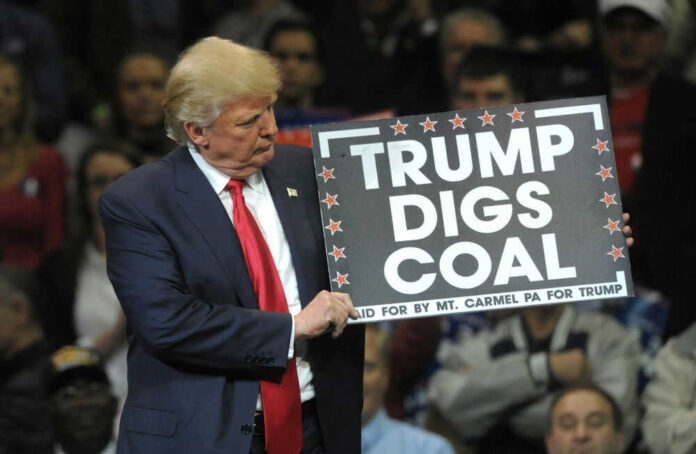
A new policy underscores coal’s critical role, igniting debates over energy security and economic implications.
Story Highlights
- The Trump administration revives the National Coal Council to support coal-fired plants.
- Energy Secretary Christopher Wright emphasizes the necessity of coal for grid reliability.
- Rising demand from AI data centers heightens the urgency for stable energy sources.
- Funds redirected to support coal plants may face legal challenges.
Trump Administration’s Coal Strategy
The Trump administration has made a decisive move to bolster coal-fired power plants, citing their crucial role in ensuring affordable and reliable electricity. Energy Secretary Christopher Wright, in a recent FOX Business interview, underscored the necessity of coal for meeting the rising energy demands driven by AI data centers and industrial needs. The administration’s decision to delay the retirement of targeted coal plants is part of a broader strategy to secure the nation’s energy future while addressing grid stability concerns.
Trump energy chief outlines coal’s ‘crucial’ role in affordability as admin pushes to keep plants running https://t.co/eLlpOwCOQo
— FOX Business (@FoxBusiness) January 19, 2026
Reviving the National Coal Council, the administration aims to bring together industry leaders to advocate for coal’s essential role in energy security. This move comes amid criticism of states that have closed coal plants, leading to increased electricity prices. The council’s revival is seen as a step towards ensuring that coal remains a significant part of the U.S. energy mix, despite the growing push for renewable energy sources.
Coal’s Role in the Energy Landscape
Coal has long been a staple of the U.S. energy sector, particularly in states like Kentucky and West Virginia. However, its dominance has waned under regulatory pressures from previous administrations. With the revival of the National Coal Council, the Trump administration is reaffirming coal’s importance in maintaining energy affordability and reliability, particularly as other states face price hikes due to plant closures.
As part of this initiative, over 15 gigawatts of coal capacity have been saved from shutdowns. This action is part of a broader agenda to delay coal plant retirements and rollback previous regulations that threatened the coal industry’s viability. The administration’s focus remains steadfast on promoting energy security over emissions concerns, a stance that resonates with conservative values of economic stability and national security.
Funding and Legal Challenges
The Department of Energy has announced a reallocation of $525 million from carbon capture and $175 million from rural energy funds to support pre-2032 coal plants. This financial redirection aims to retrofit and revive aging coal infrastructure, aligning with President Trump’s energy dominance agenda. However, this move has sparked debates over the legality of repurposing these funds, with critics arguing that it undermines congressional intent.
The administration’s commitment to coal has prompted reactions from various stakeholders. While proponents highlight the necessity of coal for economic and grid stability, critics warn of the potential environmental and legal repercussions. The ongoing discussions underscore the complex dynamics of balancing energy security with environmental objectives in the current energy landscape.
Sources:
Trump’s revived coal council includes Kentucky executives
Trump energy chief outlines coal’s crucial role in affordability
Trump admin redirects carbon capture funds to prop up old coal plants
The Trump administration orders coal-fired plants slated to shut to remain online