
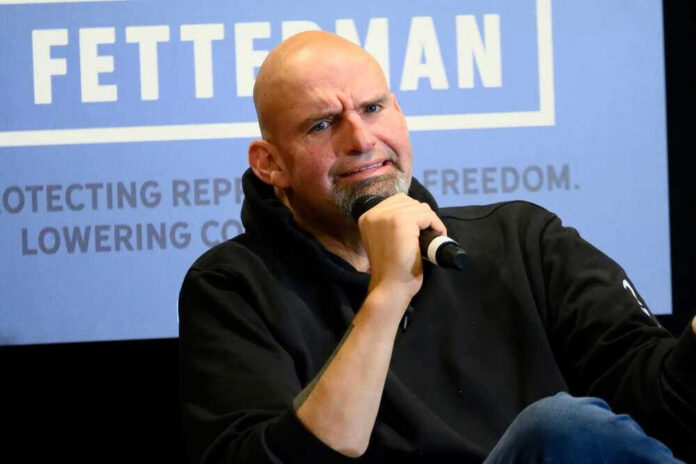
Senator John Fetterman’s decision to side with Republicans during the ongoing government shutdown exposes deep cracks in Democrat unity and signals a turning point for lawmakers who put American interests ahead of party loyalty.
Story Snapshot
- Fetterman broke ranks with Democrats, backing GOP efforts to reopen the government and rejecting partisan gridlock.
- His stance highlighted frustration with leadership tactics that use shutdowns for political leverage, impacting federal workers and families.
- Democrats blocked the Shutdown Fairness Act, intensifying the shutdown’s effects and fueling bipartisan calls for practical solutions.
- Fetterman’s vote and public criticism of both parties have ignited fresh debate over the role of independence versus party discipline in Congress.
Fetterman Defies Democrat Leadership Amidst Prolonged Shutdown
On October 18, 2025, Senator John Fetterman of Pennsylvania cast a decisive vote with Senate Republicans on the Shutdown Fairness Act, becoming one of only three Democrats to back the GOP-sponsored bill.
This move came after weeks of stalled negotiations, with Congress failing to pass critical funding measures and the government entering its fifth week of closure.
Fetterman publicly condemned the shutdown, criticizing both parties for using Americans’ livelihoods as bargaining chips and calling for bipartisan negotiations to resolve the impasse.
His actions stand out in a Senate where party-line voting has become the norm, especially on issues as consequential as government funding and federal worker pay.
John Fetterman ditches Dems in shutdown vote, urges to put America first https://t.co/jrZnwma6Tk pic.twitter.com/NNdqpIHjtb
— New York Post (@nypost) October 25, 2025
Fetterman’s independent streak has drawn attention from conservative analysts and frustrated constituents tired of the endless blame game. His rejection of Democrat leadership’s strategy—leveraging the shutdown for healthcare concessions—resonates with voters who prioritize practical outcomes over partisan victories.
Fetterman emphasized his commitment to keeping the government open, stating that his vote was about putting America first rather than advancing party politics.
This approach echoes the sentiments of many Americans who see fiscal responsibility and government accountability as essential, especially after years of overspending, inflation, and divisive social agendas that have eroded public trust in Washington.
Shutdown’s Impact on Federal Employees and Military Families
As the shutdown drags on, its consequences are felt most acutely by federal employees, military personnel, and contractors who face missed paychecks and uncertainty about their futures.
The failure to pass the Shutdown Fairness Act, which would have provided continued pay to federal workers, has deepened anxiety across the nation. Essential services are disrupted, and local economies reliant on federal spending experience mounting pressure.
The situation recalls previous shutdowns but is intensified by the close division in Congress and the unwillingness of leadership on both sides to compromise. For many, this episode highlights the dangers of using government operations as leverage in policy disputes, especially when American families bear the consequences.
President Trump and key Senate Republicans have pushed aggressively for funding bills to reopen the government without conceding ground on healthcare demands, underscoring a renewed focus on limited government and individual liberty.
Their efforts have been complicated by Democrat leadership’s insistence on attaching controversial healthcare provisions to budget negotiations. Fetterman’s break with his party not only exposes intra-party tensions but also demonstrates the influence of moderates and independents in shaping legislative outcomes.
The episode has prompted calls for more pragmatic deal-making and less reliance on political brinkmanship, a message that resonates with conservatives concerned about government overreach and fiscal mismanagement.
Bipartisan Frustration and the Push for Practical Solutions
Fetterman’s outspoken criticism of both parties reflects a broader frustration among lawmakers and voters alike.
He rejected the “blame game,” instead urging Congress to prioritize reopening the government and restoring stability for millions of Americans. His independence has earned praise from those who value common sense and practical solutions over rigid party loyalty.
Political analysts note that such high-profile defections are rare, particularly on shutdown votes, and could signal a shift towards more bipartisan cooperation if others follow suit.
However, critics within the Democrat Party argue that crossing the aisle undermines collective bargaining power and risks fracturing party unity at a critical moment.
John Fetterman breaks with Democrats in shutdown vote, says it’s an ‘easy choice’ to put America first https://t.co/BEUcQf33Rw #FoxNews @thedemocRATS organized crime syndicate Communist Racist Fascist Murderous Pedophile Party hates America. Period. They are doing literally…
— CallieBenson (@CallieforTrump) October 27, 2025
The shutdown’s long-term effects extend beyond immediate financial hardship. Public trust in government continues to erode, polarization deepens, and visible dissenters like Fetterman may prompt realignments within both parties.
Federal workers, military families, contractors, and Americans dependent on government services remain caught in the crossfire, underscoring the urgent need for leadership that places national interests above partisan agendas.
The controversy surrounding Fetterman’s vote and statements serves as a stark reminder of what’s at stake when lawmakers choose principle over politics—an approach many conservatives believe is essential for restoring constitutional values, protecting families, and ensuring responsible governance in today’s turbulent climate.
Sources:
Fetterman Statement on Government Shutdown
Fetterman says Democrats sending wrong message on government shutdown stance amid funding fight
Senate Democrats tank shutdown vote on pay for federal workers