Trump’s warning that NATO faces a “very bad” future over the Strait of Hormuz is turning a shooting war into a stress test for the entire Western alliance.
Story Snapshot
- President Trump blasted NATO allies for hesitating to deploy warships to help secure the Strait of Hormuz as the U.S.-Israel war with Iran reached its third week.
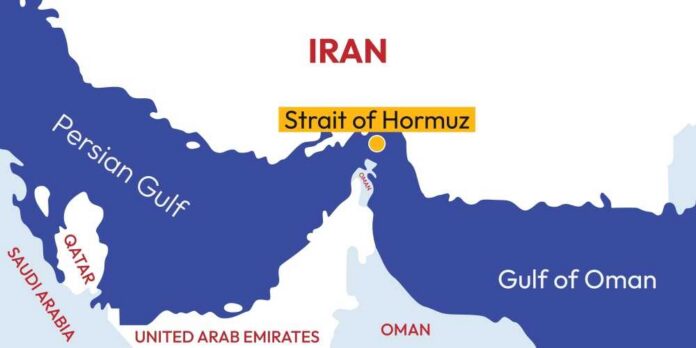
- Iran’s effective blockade threatens a chokepoint that carries roughly 20% of global oil and gas flows, intensifying price pressure and economic risk.
- Trump said the U.S. has not “needed” NATO help to hit Iran, but demanded allies share the burden of keeping energy shipping lanes open.
- Analysts cited in reporting cautioned it is too soon to declare victory, even as U.S. operations appear to be degrading Iranian capabilities.
Trump Puts NATO on Notice as Hormuz Becomes the Front Line
President Donald Trump’s latest clash with NATO isn’t about dues or defense spending—it’s about immediate wartime consequences and the price Americans pay at the pump.
With the Strait of Hormuz effectively blocked amid the U.S.-Israeli campaign against Iran, Trump publicly pressed allies to contribute warships and warned NATO could face a “very bad” future if they refuse. The message: alliance membership should mean shared risk when global commerce is under attack.
President Trump lashed out at NATO countries and US allies for not joining the Iran War effort as the Strait of Hormuz remains all but impassable for commercial shipping.
“This was a great test because we don’t need them, but they should have been there” https://t.co/CRYyC1ED1A pic.twitter.com/H7CGHvlI3Q
— Bloomberg (@business) March 17, 2026
Reporting describes Trump making the case in interviews and public remarks that America has already carried the decisive military load. He argued U.S. forces have “beaten” and “completely decimated” Iran militarily and economically, while still demanding partner nations help police the strait.
That combination—claiming the U.S. can win without them while insisting they show up anyway—captures the core tension: whether NATO is a real security partnership or a political club that ducks hard missions.
The Strait of Hormuz Is a Reality Check for Globalism and Energy Dependence
The Hormuz choke point matters because the world built an energy system that assumes free passage, even when hostile regimes control the coastline.
Research summaries emphasize that roughly one-fifth of global oil and gas flows through the strait, so even limited disruption can ripple into higher prices, shipping delays, and broader economic drag. Experts quoted in coverage warned that a prolonged closure could push oil sharply higher and raise recession fears, with U.S. consumers taking the hit quickly.
Iran’s strategy, as described by analysts in the reporting, leans on asymmetric leverage. Rather than trying to outmatch U.S. air and naval power head-on, Tehran can create economic pain through drones, missiles, and threats to shipping lanes.
The research notes Iran has prepared for years to exploit Hormuz disruption, and recent developments included reported drone activity affecting regional ports. In practical terms, that means the battlefield is not only in the skies over Iran, but also in insurance rates, tanker routes, and household budgets.
Allies Hesitate as War Goals and End-State Remain Unclear
NATO allies named in the reporting—particularly the United Kingdom, Germany, and Canada—have shown resistance to deeper involvement. The UK is portrayed as the closest partner, yet still reluctant to widen its role after direct discussions with Trump.
Germany is described as opposed to participating in the conflict, and Canada is portrayed as non-committal on offensive action. Their hesitation reflects a familiar dynamic: many European governments prefer de-escalation language and limited exposure when a conflict risks spiraling.
The same reporting also points to uncertainty about the conflict’s trajectory. Trump’s public posture has leaned toward describing the war as “won,” but expert assessments cited in the research urge caution, arguing it remains too early to declare victory and that military objectives take time to complete.
That gap matters for allied decision-making. Governments are less willing to commit ships and crews when the timeline, rules of engagement, and political end-state remain unsettled, especially when the mission could become open-ended maritime security under fire.
Burden-Sharing Returns—But This Time Americans Feel It Immediately
The dispute highlights a conservative concern that has simmered for decades: when Washington guarantees security, some partners treat U.S. strength as a permanent subsidy. Trump’s argument—America can handle the combat, but allies must help keep the sea lanes open—frames burden-sharing as more than an accounting debate.
It becomes a matter of protecting U.S. families from inflationary shocks tied to energy. If the strait stays disrupted, gasoline and shipping costs can rise fast, punishing working households regardless of politics.
Trump slams NATO allies for not joining Iran war effort, says U.S. never needed their help https://t.co/3v5YydOzga
— CNBC (@CNBC) March 17, 2026
At the same time, the reporting suggests the administration is operating in a complex environment where military progress and economic vulnerability can coexist. U.S. and Israeli strikes may degrade Iranian capabilities, yet Iran can still exploit geography to strain global supply lines.
Trump’s public pressure campaign against NATO is, at minimum, an attempt to force clarity: either allies help defend shared economic lifelines, or the alliance’s future gets renegotiated in plain view of voters who are tired of endless commitments with one-sided costs.
Sources:
Iran-US war live updates: Trump, supreme leader, oil
Donald Trump warns NATO, China and press as Iran war hits day 17