
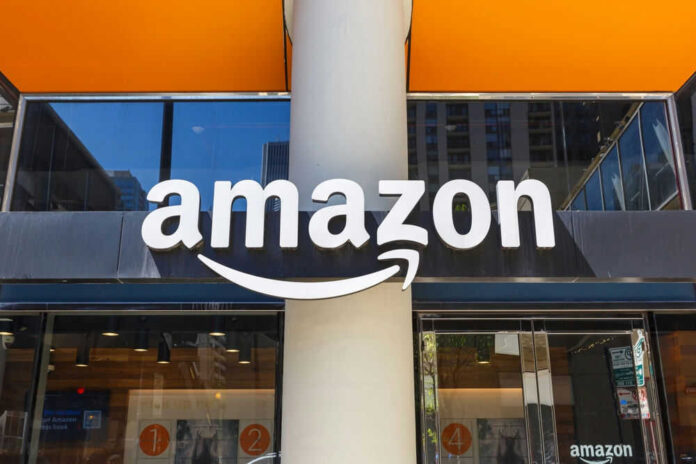
Amazon’s “cashierless future” is collapsing into store closures as the company admits it couldn’t make the economics work at scale.
Quick Take
- Amazon will close all Amazon Go and Amazon Fresh stores—about 72 locations—most of which will shut by Feb. 1, 2026.
- Amazon says the formats failed to deliver a distinctive customer experience with a workable economic model.
- California locations can stay open longer, reported as up to roughly 45 additional days, to meet regulatory requirements.
- The company is shifting resources toward Whole Foods expansion, same-day grocery delivery, and new store concepts, including a supercenter test near Chicago.
Amazon pulls the plug on Go and Fresh after a decade-long bet
Amazon announced Jan. 27, 2026, that it will close every Amazon Go convenience store and every Amazon Fresh grocery store in the U.S., totaling roughly 72 locations. Reports vary slightly on the exact breakdown, citing about 15–16 Go stores and 57–58 Fresh stores, but the overall scope is consistent: the entire Go and Fresh physical footprint is being wound down. Most stores are expected to stop operating by Feb. 1.
#BREAKING: Amazon is closing all of its Amazon Go and Amazon Fresh grocery stores while ramping up online grocery delivery — a sweeping shift that could reshape how millions of Americans shop for food. Details: https://t.co/OlnFcGmVlB pic.twitter.com/NlBKffft17
— KTLA (@KTLA) January 27, 2026
Amazon framed the decision as a business-model failure, not a temporary pause. The company said it “haven’t yet created a truly distinctive customer experience with the right economic model,” describing the closures as a difficult call.
That language matters: it signals Amazon doesn’t believe it can simply tweak prices or layouts and fix the problem. Some sites may be converted to Whole Foods, while Amazon Fresh grocery delivery will continue online.
From Bezos-era “Just Walk Out” to Jassy-era discipline
Amazon’s physical retail push has been sprawling and expensive. It started with bookstores in 2015, then the $13.7 billion Whole Foods acquisition in 2017, followed by the first Amazon Go in Seattle in 2018 using “Just Walk Out” cashierless technology.
Amazon Fresh arrived in 2020 as a more mainstream, lower-priced grocery alternative to Whole Foods. Over time, Amazon trimmed formats—bookstores and “4-star” stores were closed in 2022.
The Go and Fresh experiment also absorbed visible financial hits. Reporting tied to Amazon’s grocery buildout notes significant impairments in late 2022 related to Fresh and Go, and efforts to redesign stores in 2023 still failed to scale.
CEO Andy Jassy previously highlighted operational basics—inventory in-stock levels and cost structure—as key obstacles. In plain terms, the company struggled with the unglamorous fundamentals that decide whether a grocery store survives.
Why the closures matter to everyday shoppers and local workers
The immediate impact lands on employees and the neighborhoods that hosted these stores. Amazon’s leadership communicated that layoffs would begin soon, and communities will lose nearby options—particularly in dense urban areas where Amazon Go once promised speed and convenience.
For shoppers who preferred walking into a store rather than using app-based delivery, closures narrow choice. For working families watching inflation squeeze budgets, fewer competitors in local grocery corridors can feel like another squeeze point.
California timeline and compliance details
Amazon expects most locations to close by Feb. 1, but California stores are a special case. Coverage of the shutdown notes that certain California sites will remain open longer—reported as up to about 45 additional days—so Amazon can comply with state requirements.
The exact locations and final dates vary by store, and Amazon has not publicly provided a single universal calendar for each address. The key point is timing: customers in many states will see rapid shutdowns.
The pivot: Whole Foods growth, delivery scale, and new store concepts
Amazon’s retreat from Go and Fresh is paired with an aggressive pivot. The company is emphasizing Whole Foods as its enduring physical brand, with plans for 100+ new Whole Foods locations and smaller “Daily Shop” formats targeted to reach 10 stores by the end of 2026.
At the same time, Amazon is expanding same-day grocery delivery to more U.S. locations, building on an expansion that brought service to a large number of areas in 2025.
Amazon is also experimenting rather than quitting physical retail entirely. Reporting describes tests such as an “Amazon Grocery” concept in Chicago, a store-in-store approach in Pennsylvania, and a large supercenter concept near Chicago slated for late 2026.
Investors appeared to approve of the discipline; coverage cited shares rising after the announcement. The unanswered question is execution: Amazon is betting that delivery and Whole Foods can achieve what Fresh and Go did not—repeatable operations that scale.
For conservatives skeptical of glossy corporate “experiments,” the takeaway is straightforward: even a tech titan can’t outrun basic economics. Grocery is about reliable stock, tight margins, and local trust, not just sensors and branding.
Amazon’s own wording concedes it didn’t build a model that works broadly. Whether the pivot improves convenience or deepens dependence on app-driven delivery will hinge on competition—something many families want more of, not less.
Sources:
Amazon closing Amazon Go and Amazon Fresh stores
Amazon closes Go, Fresh stores; pivots to Whole Foods
Amazon is closing all Amazon Fresh and Amazon Go stores
Amazon closing Fresh and Go store chains
Amazon closing all Amazon Fresh and Go stores to focus on Whole Foods and grocery delivery