President Trump’s unfiltered response to the death of former Special Counsel Robert Mueller has reignited the firestorm over a politicized investigation that tormented innocent Americans and found no collusion, reminding patriots why the deep state’s witch hunts must never be forgotten.
Story Snapshot
- Robert Mueller, former FBI Director and Special Counsel, died March 20, 2026, at age 81 after battling Parkinson’s disease
- President Trump posted on Truth Social: “Good, I’m glad he’s dead. He can no longer hurt innocent people,” referencing the Russia probe
- Mueller’s two-year investigation found no Trump-Russia collusion but refused to exonerate on obstruction, fueling years of partisan warfare
- The probe indicted Trump associates like Paul Manafort and Roger Stone but never charged the President, vindicating his claims of innocence
- Trump’s blunt statement sparked backlash from establishment Republicans and the media, while resonating with supporters who remember the investigation’s overreach
Mueller’s Death Revives Memories of Partisan Witch Hunt
Robert Mueller III passed away on the evening of March 20, 2026, at his home, with his family announcing the death the following day and requesting privacy. WilmerHale law firm, where Mueller served as a partner after retirement, confirmed his passing and praised his decades of public service.
Mueller had been weakened by Parkinson’s disease in recent years, which limited his activities following his controversial tenure as Special Counsel. The decorated Marine veteran and former FBI Director left behind his wife Ann of nearly 60 years, two daughters, and five grandchildren.
Robert Mueller, former FBI director, Russia special counsel, dead at 81 https://t.co/9dTf0i5aLg pic.twitter.com/gaJHZHwcQG
— New York Post (@nypost) March 21, 2026
Trump’s Unvarnished Response Captures Conservative Frustration
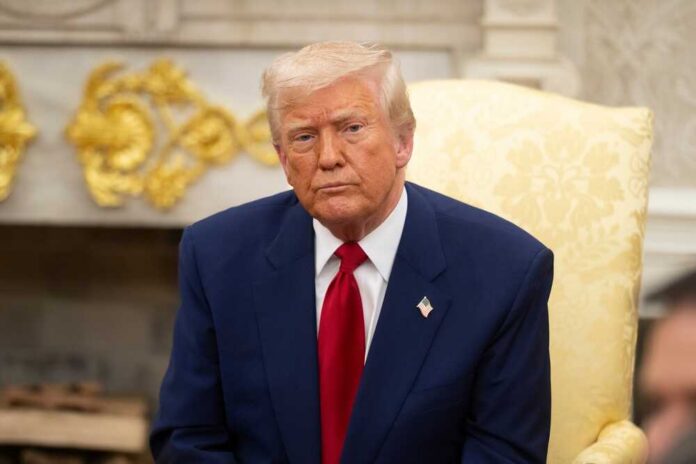
Within hours of the announcement, President Trump posted on Truth Social: “Good, I’m glad he’s dead. He can no longer hurt innocent people!” The statement immediately drew fire from establishment figures, including Senator Thom Tillis of North Carolina, who called it “sad” and said Mueller “deserves respect.”
Yet Trump’s words resonated with millions of Americans who watched Mueller’s investigation drag on for two years, destroying the lives and careers of campaign associates over process crimes while finding zero evidence of the collusion conspiracy the media promoted relentlessly.
The investigation cost taxpayers over $30 million and subjected the Trump administration to constant harassment based on the discredited Steele dossier and partisan FBI surveillance.
The Russia Probe’s Inconclusive Legacy
Appointed by Deputy Attorney General Rod Rosenstein in May 2017, Mueller investigated alleged Russian interference favoring Trump in the 2016 election. His March 2019 report indicted figures like Paul Manafort and Roger Stone on charges unrelated to collusion, but explicitly stated it found no conspiracy between the Trump campaign and Russia.
Critically, Mueller’s report also declared it “does not exonerate” Trump on obstruction of justice, a legally absurd standard that defied the presumption of innocence. This ambiguous conclusion allowed Democrats and the media to continue attacking Trump despite the absence of underlying crimes, undermining the principle that prosecutors either charge or clear suspects.
A Career Marked by Post-9/11 Reforms and Controversy
Mueller served as FBI Director from 2001 to 2013, appointed by President George W. Bush just days before the September 11 attacks. He reshaped the bureau’s focus toward counterterrorism, earning bipartisan praise for strengthening national security infrastructure during a critical period.
His tenure was extended two years beyond the standard 10-year term by President Obama with congressional approval, reflecting widespread confidence in his leadership at the time.
Mueller’s earlier Justice Department work included prosecuting the Pan Am Flight 103 bombers and Manuel Noriega, building a reputation for integrity that made his appointment as Special Counsel seem credible to many, even as conservatives questioned the probe’s predicate.
The Political Fallout Continues
Mueller’s death reignites debates over whether his investigation was a legitimate counterintelligence operation or a politically motivated effort to undermine a duly elected president. Trump allies point to the fact that Mueller’s team was stacked with Democratic donors and that the probe originated from dubious FISA warrants based on opposition research.
The FBI Agents Association mourned Mueller’s passing, praising his service, while WilmerHale called him “a person of the greatest integrity.”
Yet for conservatives who lived through the investigation’s constant leaks and media hysteria, Mueller’s legacy will always be tainted by his refusal to explicitly clear Trump when the evidence showed no collusion, prolonging a divisive chapter that damaged faith in federal law enforcement and undermined constitutional norms.
Sources:
Robert Mueller, former FBI director and special counsel, dies at 81 – ABC News
Robert Mueller, former FBI director and special counsel, dies at 81 – Politico