
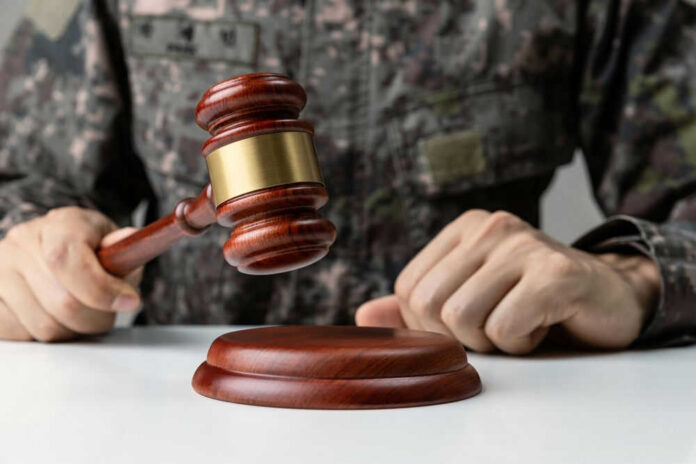
A divided federal court just said the Pentagon’s transgender ban looked less like sober military judgment and more like punishment of an unpopular minority—and that should make every citizen who cares about limited government sit up straight.
Story Snapshot
- A D.C. appeals court ruled 2–1 that the Trump-era Pentagon policy on transgender troops likely violates equal protection rights.
- The injunction shields only currently serving plaintiffs, leaving the ban on new transgender recruits in place for now.
- The majority said the government’s readiness rationale looked “pretextual” and “driven by the bare desire to harm” a disfavored group.
- The dissent warned that judges are “not generals,” blasting the ruling as improper interference with military decisions.
What The Court Actually Did, And What It Carefully Did Not Do
The three-judge panel of the United States Court of Appeals for the District of Columbia Circuit did not throw open the military’s doors to every transgender American overnight. It did something narrower and more surgical.
It agreed with a lower court that the Trump administration’s 2025 policy, crafted by Defense Secretary Pete Hegseth, likely violates the Constitution as applied to the specific active-duty plaintiffs who sued. Those troops remain protected from discharge or exclusion, but the Pentagon may still bar new transgender recruits from enlisting while the case continues.[1][2]
That line-drawing matters. Judges signaled that once someone has already volunteered, passed screening, and worn the uniform, the government needs a much stronger justification to kick them out than vague references to “unit cohesion” and “gender identity issues.”
The court emphasized that the policy categorically disqualifies anyone ever diagnosed with gender dysphoria, regardless of how well they are functioning now, a sweep the majority said was neither reasonable nor evenhanded in classifying who is fit to serve.[1][2]
Pentagon policy illegally banned transgender troops from military service, appeals court panel rules | Click on the image to read the full story https://t.co/kF1SsLKX3q
— MyNBC5 (@MyNBC5) June 2, 2026
Why The Policy Was Branded Arbitrary And Based On Animus
Judge Robert Wilkins, writing for the majority, did not mince words. According to contemporary reporting, he concluded the government’s stated readiness rationale was “pretextual” and that the policy appeared “premised, at least in part, on a non-legitimate state interest to harm the politically unpopular group of transgender persons.”[1]
That is legalese for a simple, explosive judgment: the court saw hostility toward a group, not a neutral rule about medical fitness, driving a federal policy that can end military careers.
From a constitutional perspective, that should ring alarm bells. When the government uses a blunt medical label to brand an entire class of citizens as unfit, with no individualized assessment and no contemporary evidence that their service undermines readiness, it stops looking like limited government and starts looking like old-fashioned status-based exclusion.
The majority framed this as an equal protection problem, not a culture-war skirmish, calling the policy “both arbitrary and based upon animus” toward transgender people who had already proven they could meet military standards.[2]
The Dissent’s Warning About Judges Playing General
Judge Justin Walker’s dissent gives voice to a concern many conservatives share: where does judicial review of military policy stop and judicial micromanagement of war-fighting begin?
Walker argued bluntly that “we are judges not generals,” stressing that the Constitution assigns decisions about who may serve to Congress and the Commander in Chief, not to unelected panels in Washington.[1][2]
He saw the policy as a categorical medical standard—tough, perhaps, but the kind of line the armed forces routinely draw.
That institutional argument is not frivolous. Courts have historically deferred to the military on matters of readiness and personnel, even when those policies were later judged unwise.
Walker’s point is that if judges start second-guessing every exclusion rule, from asthma to mental health, they risk substituting their policy preferences for the hard tradeoffs military leaders must make.
The majority’s answer, however, was that deference does not extend to policies animated by hostility rather than by evidence, especially when citizens’ constitutional rights are at stake.[1][2]
How The Supreme Court And The Bigger Legal Landscape Fit In
Complicating the picture, the United States Supreme Court had already allowed the Trump administration to enforce its transgender policy nationwide while litigation proceeds, lifting earlier broad injunctions.
That emergency order is not a final ruling on the merits, but it gave the government a short-term procedural victory and kept the ban on the books even as challenges like this one advanced.
As a result, the D.C. Circuit’s latest decision lands in a legal landscape where the policy operates in most contexts but looks increasingly shaky under constitutional scrutiny.
BREAKING: US Appeals court has ruled 2-1 in favor of STRIKING DOWN Trump's ban on transgender military servicemembers.
Obama-appointed judge Robert Wilkins and Clinton-appointed judge Judith Rogers ruled against Trump's policy. pic.twitter.com/dNxdfzO2WT
— Dan Bongino (@BonginoDan60510) June 2, 2026
Meanwhile, other federal courts have taken a harder look at similar restrictions. A Washington state case produced a ruling favoring transgender plaintiffs challenging the ban, and advocacy groups such as GLAD describe the Hegseth policy as a “complete purge” of transgender service members, not a fine-tuned readiness rule.[1]
That clash of narratives—purge versus prudence—will drive the next phase: full discovery, internal Pentagon emails, testimony from commanders, and possibly another trip to the Supreme Court, where the justices will need to decide how far equal protection and military deference really reach.
Sources:
[1] Web – Federal Appeals Court Finds Trump’s Transgender Military Ban …
[2] Web – Divided appeals court rules Trump administration’s ban on transgender …