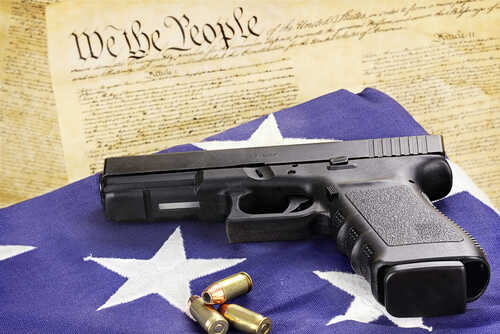
Supreme Court justices signaled strong skepticism toward Hawaii’s restrictive gun law, offering hope for Second Amendment defenders nationwide.
Story Highlights
- Republican-appointed justices sharply questioned Hawaii’s requirement for explicit permission to carry concealed firearms on private properties open to the public.
- The Trump administration backed gun owners, warning against pretextual state regulations that undermine Bruen protections.
- Hawaii’s law, enacted post-2022 Bruen ruling, creates a default ban affecting 96.4% of Maui’s publicly accessible land.
- A decision expected by June 2026 could strike down similar rules in four other states, bolstering carry rights in 45 states.
Case Challenges Hawaii’s Post-Bruen Gun Restriction
On January 20, 2026, the Supreme Court heard oral arguments in Wolford v. Lopez. Three Maui concealed-carry permit holders and the Hawaii Firearms Coalition challenge a 2022 Hawaii law.
This statute prohibits bringing firearms onto private properties open to the public, like stores and restaurants, without explicit owner permission. Violations carry misdemeanor penalties up to one year in prison. Plaintiffs secured a partial federal injunction, but the 9th Circuit upheld the core provision in 2024, citing historical traditions.
Chief Justice Roberts suggests that Hawaii’s restrictions on concealed carry treat the 2nd Amendment as a “disfavored” and “second level” right compared to other constitutionally-protected freedoms. @FDRLST pic.twitter.com/M1sHhVjRVP
— Shawn Fleetwood (@ShawnFleetwood) January 20, 2026
Justices Question Historical Justifications
Republican appointees dominated questioning during arguments. Justice Gorsuch dismissed Hawaii’s reliance on 1865 Louisiana Black Codes as an outlier. Chief Justice Roberts drew First Amendment parallels, noting no requirement for an explicit invitation to speak on private property. Justice Alito probed the law’s broad restrictions.
Hawaii, represented by Neal Katyal, defended it as consistent with property rights and traditions like a 1771 New Jersey law. Challengers, via attorneys Alan Beck and Kevin O’Grady, called it a de facto ban nullifying Bruen’s self-defense guarantees.
Trump Administration Supports Gun Owners
Principal Deputy Solicitor General Sarah Harris argued for the challengers. She warned that framing regulations as property rules enables overreach, such as landlord bans on tenant firearms.
This aligns with President Trump’s commitment to robust Second Amendment enforcement after years of leftist assaults on gun rights. Liberal justices, like Ketanji Brown Jackson, emphasized property owners’ consent over armed entry. The case tests Bruen’s mandate that modern laws match historical firearm traditions, rejecting subjective barriers.
Hawaii stands among five states imposing express consent rules. The other 45 permit carry unless owners post explicit prohibitions. Plaintiffs argue the law effectively bars carry across 96.4% of Maui’s public-access land, frustrating lawful self-defense in everyday settings like shopping or dining.
Potential Nationwide Precedent for Carry Rights
A reversal could expand injunctions, allowing default concealed carry in Hawaii businesses pending final ruling. Long-term, it might invalidate similar laws elsewhere, reinforcing Bruen nationwide.
Gun owners gain broader access; property owners retain signage options for bans. This counters post-Bruen state resistance, preserving constitutional self-defense amid frustrations with overreaching restrictions. Gun safety groups like Brady United back Hawaii, claiming reasonableness, but conservative justices appeared unmoved. Decision looms by June 2026.
Sources:
Hawaii AG to Supreme Court: Gun control is Hawaiian tradition
Supreme Court appears sympathetic to gun owners’ challenge to Hawaii law
Gun rights on private property debated at Supreme Court
Supreme Court weighs state limits on carrying guns in private businesses