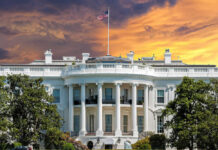

President Trump’s vision for a magnificent White House ballroom has cleared a major hurdle, as a federal arts panel unanimously approved the $400 million, privately funded project despite a record-breaking wave of opposition from preservationists and bureaucrats who apparently prefer hosting world leaders in temporary tents.
Story Highlights
- Commission of Fine Arts unanimously approves Trump’s 90,000-square-foot White House ballroom in a 6-0 vote
- Record 2,000+ public comments pour in with 99% opposition from preservationists and critics
- $400 million project privately funded, bypassing taxpayer burden while replacing “dilapidated” East Wing
- All panel members are Trump appointees after the October 2025 commission reshuffling
- Final approval from the National Capital Planning Commission is needed by March 5 before construction proceeds
Trump Appointees Deliver Unanimous Approval
The U.S. Commission of Fine Arts voted 6-0 to approve President Trump’s ambitious plan to construct a 90,000-square-foot ballroom at the White House East Wing. Every voting member was appointed by Trump after he cleared the previous commission in October 2025. Original architect James McCrery recused himself from the proceedings.
Commission Chairman Rodney Mims Cook Jr. praised the revised design, emphasizing that America should no longer host world leaders in temporary tents. The project represents Trump’s vision for what he describes as the “greatest ballroom in the world.”
Fine Arts Panel Unanimously OKs WH Ballroom Proposal https://t.co/90ff7mIw2V
– did the Federal Reserve as permission to remodel? Does Congress ask to remodel their building?— JimStrohmeier (@USAF_Veteran57) February 19, 2026
Private Funding Shields Taxpayers from Costs
The $400 million ballroom will be financed entirely through private donations and corporate contributions, sparing taxpayers from shouldering the expense.
This funding approach addresses conservative concerns about government spending while allowing the administration to pursue infrastructure improvements without adding to the national debt.
Trump characterized the existing East Wing as “small and dilapidated,” noting the new structure will accommodate 650 guests for state functions.
The privately-funded model demonstrates fiscal responsibility while upgrading facilities that genuinely needed replacement after decades of deterioration and makeshift solutions.
Design Modifications Address Scale Concerns
Project architect Shalom Baranes presented revised renderings incorporating significant changes to address visibility and proportion issues. The design team removed a south-facing pediment to reduce overall height and added strategic landscaping, relocating fountains to shield views from Pennsylvania Avenue.
Landscape architect Rick Parisi showcased mock-ups demonstrating how tree coverage would minimize the structure’s visual impact on the historic White House complex.
These modifications represent thoughtful responses to legitimate architectural concerns while maintaining the ballroom’s functionality. The 90,000-square-foot facility will replace the current 55,000-square-foot Executive Residence area.
Historic Preservation Battle Continues
The National Trust for Historic Preservation filed a lawsuit attempting to halt construction, with CEO Carol Quillen claiming the ballroom’s scale would “overwhelm” the Executive Residence.
Commission Secretary Thomas Luebke reported receiving over 2,000 public comments, representing a record level of engagement in CFA history, with 99% expressing opposition, citing concerns about demolition permits, historic integrity, and funding transparency.
These preservation groups demonstrate the typical resistance to necessary improvements that conservatives recognize as bureaucratic obstruction. Commissioner Chamberlain Harris defended the project’s scale by noting that the greatest country deserves the greatest ballroom, a straightforward common-sense position.
Construction at the East Wing site has continued since early February, with visible demolition work photographed on February 4. The project now awaits final approval from the National Capital Planning Commission, chaired by Will Scharf, who serves as Trump’s White House staff secretary.
That hearing is scheduled for March 5, 2026, with vertical construction potentially beginning in April if approved. The lawsuit from preservation groups remains pending in federal court, though the administrative approvals signal strong momentum for the project’s completion.
Sources:
Arts commission approves Trump’s White House ballroom plans – CBS News
White House ballroom plan approved by arts panel of Trump appointees – CBS12
Trump’s appointees on fine arts panel OK big White House ballroom – Politico